
Family & Support
Seven Tips for Talking to Loved Ones About Addiction: A Calm, Compassionate Guide for Real Conversations
A hard conversation, done with care, can be the first step toward treatment. Here is how to start one without shame, blame, or ultimatums.
Published January 1, 2024 · Updated June 16, 2026 · Last medically reviewed June 16, 2026

Key takeaways
- Pick a private, sober moment and lead with care, not confrontation or labels.
- Talk about specific behaviors you have observed instead of accusations or "always" and "never."
- Listen more than you speak, and expect defensiveness without taking the bait.
- Come prepared with real treatment options and offer to help take the first step.
- One talk is rarely enough, so protect the relationship and keep the door open.
Watching someone you love struggle with alcohol or drugs is its own kind of heartbreak. You see the warning signs, you worry, and you replay the same question over and over: what do I actually say? The fear of saying the wrong thing, pushing them away, or making it worse can keep families silent for months or years.
Here is the reassuring part. You do not need the perfect script. A calm, caring conversation, even an imperfect one, can be the moment that opens the door to help. These seven tips draw on guidance from the National Institute on Alcohol Abuse and Alcoholism and other federal health authorities to help you start that conversation with compassion instead of conflict.
What is the best way to approach someone about their addiction?
The short answer: privately, calmly, and from a place of care. Research-based guidance from NIAAA is consistent on this point. A nonjudgmental tone and a little empathy make a productive conversation far more likely than blame or confrontation. The tips below build on that foundation.
Tip 1: Choose the right time and a private place
Timing changes everything. The worst moments to raise your concern are when your loved one is intoxicated, in the middle of a crisis, or surrounded by other people who might make them feel cornered. NIAAA specifically advises waiting until the person is safe, stable, and sober, and steering clear of high-pressure occasions like major holidays.
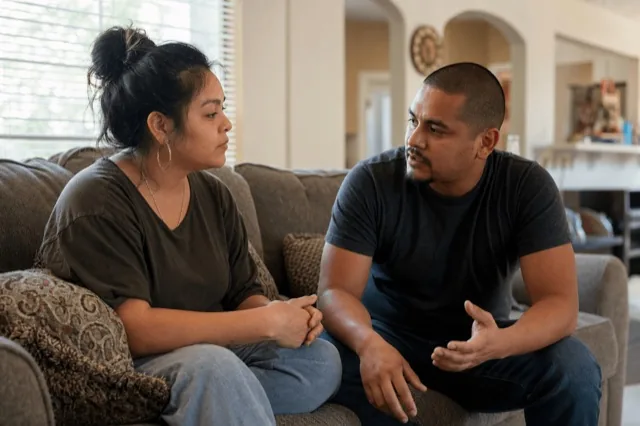
Pick a quiet, private setting where you both have time and will not be interrupted. A calm kitchen table on an ordinary afternoon beats a tense holiday dinner every time.
Tip 2: Lead with care, not accusation
Open with love, not a list of grievances. Statements that begin with "I" tend to land better than ones that begin with "you," because they share your feelings instead of assigning blame. Compare "You are ruining this family" with "I love you, and I have been really scared for you lately." The second invites a conversation. The first invites a fight.
The goal of this first talk is connection, not a confession. If your loved one walks away feeling cared about rather than attacked, you have already succeeded.
Tip 3: Stick to specific things you have seen
Vague accusations and sweeping words like "always" and "never" are easy to argue with. Specific, factual observations are not. Instead of "you are always drunk," try "on Tuesday you missed picking up the kids, and I found bottles in the garage."
NIAAA recommends sticking to the facts you have observed and framing substance use as a treatable medical condition rather than a moral failing. Concrete examples keep the conversation grounded and harder to dismiss.
Tip 4: Listen more than you talk
This is a conversation, not a verdict. Once you have shared your concern, stop and genuinely listen. Ask open questions and let there be silence. Your loved one may share fears, shame, or struggles you did not know about, and feeling heard can lower their defenses far more than any argument.
You do not have to fix everything in one sitting. Sometimes the most powerful thing you can do is simply understand what they are carrying.

Tip 5: Expect defensiveness, and do not take the bait
Denial, anger, minimizing, and deflection are common reactions, and they are not personal. Substance use disorders affect judgment and self-perception, so pushback does not mean you were wrong to speak up. NIAAA cautions against ganging up on the person or backing them into a corner, which tends to harden resistance.
If the conversation gets heated, you can pause it. "I can see this is hard. I am not going anywhere, and we can talk again when you are ready" keeps the relationship intact and the door open.
Tip 6: Come prepared with real options
Hope is more persuasive when it is concrete. Before you talk, do a little homework so you can offer a clear next step rather than just expressing worry. Know what treatment can look like, what your insurance may cover, and who to call.
According to NIDA, substance use disorders are chronic but treatable, and effective care often combines counseling, behavioral therapy, and, where appropriate, medication. You might point your loved one toward alcohol addiction treatment or drug addiction treatment, and offer to make the first call or sit with them while they do. SAMHSA's National Helpline at 1-800-662-HELP is free, confidential, and available 24/7 in English and Spanish for referrals.
Tip 7: Keep the door open after the talk
One conversation rarely changes everything, and that is normal. Recovery is a process, and your loved one may not be ready the first time you raise it. What matters is that you planted the seed and showed up with care.
Stay in touch, acknowledge any small steps forward, and keep reminding them that help is available and your support has not expired. Lasting recovery is also supported by aftercare and ongoing connection, so the relationship you protect today can keep mattering long after treatment begins.
What if I think a formal intervention is needed?
A surprise group confrontation, the kind dramatized on television, is not always the best first step and can feel like an ambush. Many families get further with a series of private, supportive conversations. If you do believe a structured intervention is warranted, consider working with a licensed interventionist or addiction professional who can plan and guide it safely. Our family support team can help you weigh the options and prepare.
How do I take care of myself through this?
Loving someone with an addiction is exhausting, and you cannot pour from an empty cup. Support groups such as Al-Anon and Nar-Anon, family therapy, and your own counselor exist for exactly this reason. Setting boundaries is not abandonment; it protects your wellbeing and models the kind of healthy behavior that supports everyone's recovery.
If your loved one is in New Hampshire or Massachusetts, our admissions team can walk you through how to start the conversation and what comes next. You do not have to figure this out alone.
The bottom line
You will probably not say everything perfectly, and you do not need to. A calm, private, nonjudgmental conversation rooted in specific concern and backed by real options is one of the most loving things you can do for someone caught in addiction. Lead with care, listen more than you speak, expect some resistance, and keep the door open.
When your loved one is ready, even a little, our team is here, confidentially and without judgment, across New Hampshire and Massachusetts.
Sources
- Starting the Conversation - Alcohol Treatment Navigator (2024). National Institute on Alcohol Abuse and Alcoholism (NIAAA). View source
- Treatment for Alcohol Problems: Finding and Getting Help (2024). National Institute on Alcohol Abuse and Alcoholism (NIAAA). View source
- Treatment (2024). National Institute on Drug Abuse (NIDA). View source
- National Helpline (2024). Substance Abuse and Mental Health Services Administration (SAMHSA). View source
Frequently asked questions
How do I start a conversation with someone about their addiction?
Choose a private, calm moment when they are sober, and open with care rather than accusation. Name specific things you have noticed and how they affect you, then listen. NIAAA suggests preparing what you want to say in advance and keeping a nonjudgmental tone.
Should I stage an intervention?
A surprise group confrontation is not always the best first step and can feel like an ambush. Many families start with a private, supportive conversation. If you do pursue a formal intervention, consider working with a licensed professional who can guide it safely.
What if my loved one denies they have a problem?
Denial and defensiveness are common. You do not have to win the argument in one sitting. Stay calm, avoid labels, restate your concern, and leave the door open. Planting the seed matters even if they are not ready that day.
Where can I get help right now?
SAMHSA's National Helpline (1-800-662-HELP) is free, confidential, and available 24/7 in English and Spanish for treatment referrals. You can also call our admissions team in New Hampshire or Massachusetts to talk through options.
Keep reading
-
 Family & Support
 Family Support FAQs for Addiction Recovery: A Warm Guide for Loved Ones Who Want to Help
You do not need a clinical degree to help someone you love recover. You need willingness, patience, and a few clear answers. November 28, 2025 -
 Family & Support
 How to Help an Alcoholic Spouse: A Compassionate Guide
Loving someone with a drinking problem is exhausting. Here is what actually helps, backed by research, and how to protect yourself along the way. April 23, 2026 -
 Family & Support
 Repairing Trust After Substance Use: A Real-World Guide to Healing Relationships
Trust is not rebuilt with one grand gesture. It is rebuilt in layers, through patience, consistency, and honesty that loved ones can see. January 1, 2024
This content is for informational purposes only and is not a substitute for professional medical advice, diagnosis, or treatment. If you or someone you know is in crisis, call or text 988. In an emergency, call 911.