
Drug Addiction
Does Xanax Show Up on a Drug Test?
Whether Xanax shows up depends on the type of test, how recently you took it, and how your body clears it. Here is what the science actually says.
Published April 22, 2026 · Updated June 16, 2026 · Last medically reviewed June 16, 2026

Key takeaways
- Xanax only shows up if the test screens for benzodiazepines. Standard 5-panel tests do not include them, while most 10-panel tests do.
- Typical detection windows are roughly 1 day in blood, 2 to 3 days in saliva, several days to weeks in urine, and up to 90 days in hair.
- Many routine immunoassays detect alprazolam poorly, so confirmatory lab testing (GC-MS or LC-MS/MS) is often needed for an accurate result.
- A valid prescription is usually verified through a Medical Review Officer, who can report a positive screen as negative to an employer.
- Stopping Xanax suddenly can be dangerous. Withdrawal can include life-threatening seizures, so it should be tapered under medical supervision.
If you take Xanax, or you have a drug test coming up, the question is simple: will it show? The honest answer is "it depends." Whether Xanax appears on a screen comes down to the type of test, how recently you took it, and how your body clears the drug.
This guide walks through which tests detect Xanax, how long it stays in your system, why some tests miss it, and what a valid prescription means for your result. If your use of Xanax has started to feel out of control, the same information can help you understand why it is so hard to stop, and where to get help safely.
Does Xanax show up on a drug test?
Xanax is the brand name for alprazolam, a benzodiazepine used to treat anxiety and panic disorders. It shows up on a drug test only when the test is built to screen for benzodiazepines.
That distinction matters more than most people expect:
- The standard 5-panel test screens for amphetamines, cannabis (THC), cocaine, opiates, and PCP. It does not include benzodiazepines, so Xanax will not show on a 5-panel screen.
- The 10-panel test usually adds benzodiazepines, barbiturates, methadone, and other substances. Most 10-panel tests will detect alprazolam when it is still present.
So "does Xanax show up on a drug test" really means "does this particular test screen for benzodiazepines." Per the StatPearls drug testing reference, benzodiazepines fall outside the federally mandated 5-panel and are added in expanded commercial panels.
Why some benzodiazepine tests still miss Xanax
Here is a wrinkle that surprises people: even a benzodiazepine panel can miss alprazolam. Many routine immunoassay screens were designed around other benzodiazepines and cross-react poorly with alprazolam and its main metabolite. That can produce a false negative.
To confirm a result, labs use more precise methods such as gas chromatography-mass spectrometry (GC-MS) or liquid chromatography-tandem mass spectrometry (LC-MS/MS). These confirmatory tests detect alprazolam far more reliably than a quick immunoassay strip.
How long does Xanax stay in your system?
Alprazolam has a mean plasma elimination half-life of about 11 hours in healthy adults, according to its FDA prescribing information. Half-life is the time it takes your body to clear half of the drug, so a single dose is largely gone within a few days, though detectable traces and metabolites can linger longer.
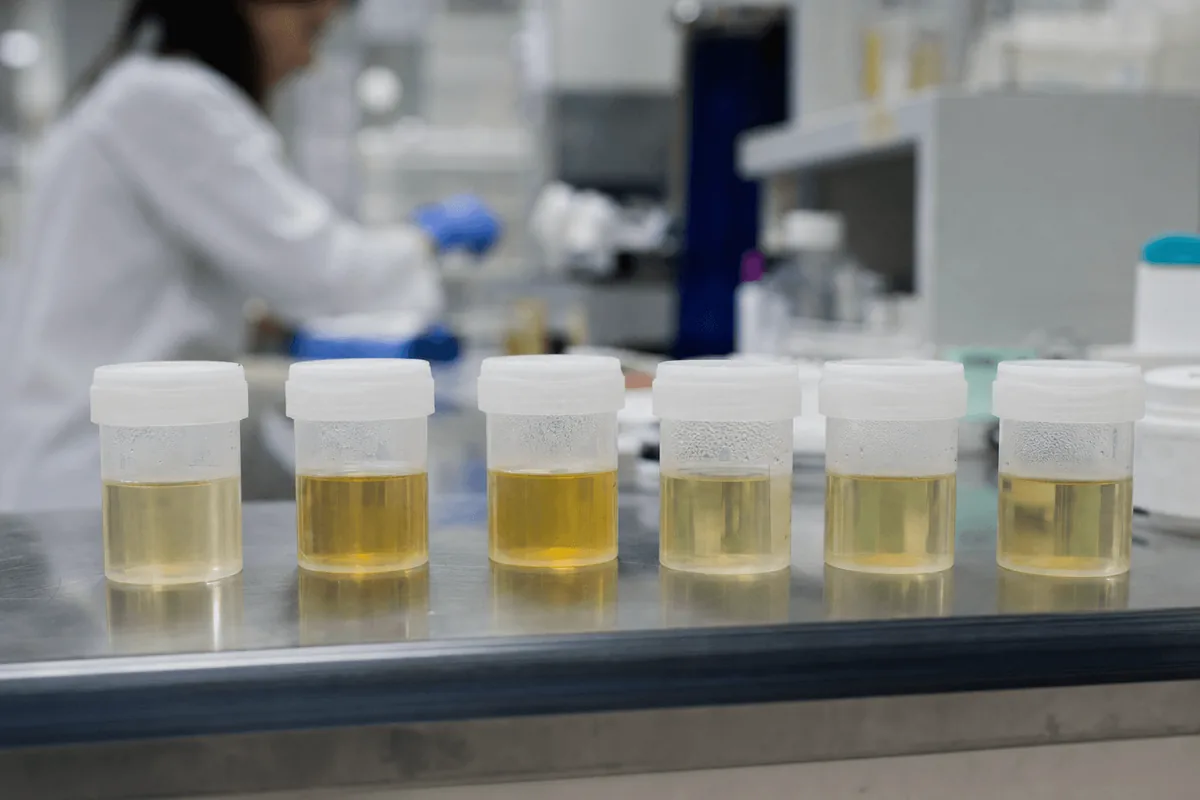
Detection windows vary by the type of sample tested. These are general ranges, not guarantees, since individual results depend on the factors below:
| Test type | Typical detection window |
|---|---|
| Blood | Around 1 day |
| Saliva | About 2 to 3 days |
| Urine | Several days; longer with heavy or chronic use |
| Hair | Up to about 90 days |
Urine is the most common workplace test. For a single dose, alprazolam usually clears within several days, but with heavy or chronic use, benzodiazepines can be detectable for several weeks. Hair testing captures the longest history because the drug is deposited in the hair shaft as it grows.
What affects how long Xanax is detectable
No two people clear Xanax at exactly the same rate. The main factors include:
- Dose and frequency. Larger and more frequent doses take longer to clear.
- Duration of use. Long-term, daily use extends detection windows compared with a one-time dose.
- Metabolism, age, and liver function. Alprazolam is processed by the liver, so slower metabolism or reduced liver function lengthens clearance.
- Body composition and hydration. These can shift results modestly, especially for urine tests.
- The test itself. A sensitive lab confirmation method detects much smaller amounts than a basic immunoassay.
What if you have a valid Xanax prescription?
A positive benzodiazepine result does not automatically mean a "failed" test. For regulated testing, a Medical Review Officer (MRO), a licensed physician, reviews positive results before they reach an employer.
If you have a legitimate prescription for alprazolam and verify it with the MRO, the officer can report the result as negative to your employer. The key is to disclose your prescriptions through the proper channel and follow your testing program's policy, which can differ between workplaces and agencies.
When Xanax use becomes a bigger problem than a drug test
If you are timing doses around a drug test, or feeling anxious about whether it will show, that worry can be a signal worth paying attention to. Xanax is effective, but it also carries a real risk of dependence and addiction, which is why the FDA added a boxed warning to the entire benzodiazepine class describing the risks of abuse, misuse, addiction, physical dependence, and withdrawal.
Physical dependence can develop with regular use, sometimes within a few weeks. Alprazolam's short half-life and rapid onset are part of why it can be especially habit-forming and difficult to stop.
Why you should never quit Xanax cold turkey
This is the most important safety point on this page. Stopping Xanax suddenly after regular use can be dangerous and even life-threatening. According to the alprazolam clinical reference, abrupt discontinuation or rapid dose reduction can trigger acute withdrawal, including seizures.
For that reason, Xanax should be reduced gradually, on a medically supervised taper, not stopped on your own to pass a test or because you want to quit. If benzodiazepines have become a problem, a clinician can build a safe plan to come off them.
Getting help with Xanax and benzodiazepine dependence
If Xanax use has become hard to control, you are not stuck with it. Safe, structured treatment exists, and it starts with a medical assessment rather than willpower alone.
At Clear Steps Recovery, our drug addiction treatment and dedicated benzodiazepine addiction treatment programs are designed for exactly this. We pair a supervised approach to withdrawal with medication-assisted treatment and counseling, so the medical and psychological sides of recovery reinforce each other. Evidence-based therapies such as cognitive behavioral therapy help you understand the patterns behind the use and build coping skills that last.
Recovery is also about what comes next. Our aftercare program keeps support in place after the structured part of treatment ends, when the risk of returning to use is highest. As SAMHSA notes, treatment works best as an ongoing, personalized process rather than a single event.
If you are ready to talk it through, our admissions team is here, confidentially and without judgment, at our drug rehab in New Hampshire and our outpatient center near Boston.
Sources
- FDA requiring Boxed Warning updated to improve safe use of benzodiazepine drug class (2020). U.S. Food and Drug Administration (FDA). View source
- Alprazolam (2024). StatPearls, National Center for Biotechnology Information (NCBI Bookshelf). View source
- Drug Testing (2023). StatPearls, National Center for Biotechnology Information (NCBI Bookshelf). View source
- A Review of Alprazolam Use, Misuse, and Withdrawal (2018). George SR, Moselhy HF, et al. (PubMed Central). View source
- Substance Use Treatment (2024). Substance Abuse and Mental Health Services Administration (SAMHSA). View source
Frequently asked questions
Does Xanax show up on a standard drug test?
Not always. Xanax (alprazolam) is a benzodiazepine, and the standard 5-panel test does not screen for benzodiazepines. It will show up on tests that include a benzodiazepine panel, such as most 10-panel tests, when the drug is still detectable.
How long does Xanax stay in your system?
Alprazolam has a mean elimination half-life of about 11 hours in healthy adults, so most of a single dose clears within a few days. Detection windows vary by test: roughly 1 day in blood, 2 to 3 days in saliva, several days to a few weeks in urine, and up to about 90 days in hair.
Why might a benzodiazepine test miss Xanax?
Many routine benzodiazepine immunoassays cross-react poorly with alprazolam and its main metabolite, so they can return a false negative. Confirmatory lab methods such as GC-MS or LC-MS/MS detect it far more reliably.
Will a Xanax prescription cause a failed drug test?
A positive screen is typically reviewed by a Medical Review Officer (MRO). If you have a valid prescription and verify it, the MRO can report the result as negative to your employer. Policies vary, so disclose prescriptions through the proper channel.
Can you stop taking Xanax to pass a drug test?
Stopping Xanax abruptly can be dangerous. After regular use, sudden discontinuation can trigger severe withdrawal, including seizures. Xanax should be tapered under medical supervision, not stopped on your own to beat a test.
Keep reading
-
 Drug Addiction
 Addiction and Crime Statistics 2026: Arrests, Incarceration, Drug Courts, and the New Hampshire and Massachusetts Numbers
The most widely quoted addiction and crime numbers are years out of date. Here is what the current federal, state, and peer-reviewed data actually show. August 18, 2026 -
 Drug Addiction
 Xanax Side Effects: Risks, Interactions, and Warning Signs
Xanax relieves anxiety quickly, but it carries real risks. Here are the side effects, the interactions that turn dangerous, and the warning signs that mean it is time to get help. March 29, 2026 -
 Drug Addiction
 Can Drug Use Cause an Enlarged Heart?
Stimulants, opioids, and heavy drinking all force the heart to work harder than it should. Over time, that strain can enlarge the heart, but stopping use early can reverse some of the damage. March 29, 2026
This content is for informational purposes only and is not a substitute for professional medical advice, diagnosis, or treatment. If you or someone you know is in crisis, call or text 988. In an emergency, call 911.